

I sprinted after two firefighters at the scene. A store owner was in trouble. He had stepped out into the street and slipped into quicksand. The firefighters hauled the poor man up before he completely disappeared. By the time I reached them, movie camera in hand, I took the lens cap off and hit record. I witnessed myself flying to the ground in slow motion, landing on my side, in disbelief at the rescue unfolding in front of me. One of the firefighters started CPR, and I knew the man would make it.
“This is exactly what SPOKE needs,” said my dream voice.
I woke up. Saturday morning, June 2025. Seattle sunshine or Seattle gray—it didn’t matter. I was energized. I lay in bed, reflecting on the long road of filming my newest documentary, SPOKE. The message was clear: We needed to reshoot. The old version paled beside what the dream had just shown me.
We started filming in the fall of 2023. By the time the dream intervened, Filmabee Studios had spent nearly 300K on the budget. “Picture lock” is what we say when we’re done editing. It means color correction, scoring, and sound design can start. To lock a picture is a big deal because team members work to synced picture and sound. To give you an idea, our sound designer had at least fifty channels he was tracking, which meant he would have to realign them all for a new picture lock. I had pronounced the film done twice. That’s two picture locks, causing my team two major headaches. A third time would mean a full-on migraine.
After the first picture lock in 2024, we submitted the film to nearly thirty festivals, but every single one turned it down. In an attempt to recast its fate, I re-edited for a test screening at the Vashon Film Institute in January of 2025. On the way there my stomach was in knots. Not the kind of knots lowering ship anchors when you know you can finally dock, but uneasy knots trying to hold something together and failing.
Watching your film with an audience is the best measuring tool. Not because we should listen to every piece of feedback, but because of the sensory information our bodies download. The first hit of invisible information came during the screening itself, while I was seated in the very back row, in destined darkness, feeling the low energy of the room. I caught myself gripping the seat handles. I observed my body and made a mental note to revisit the feeling.
The second time the sensory feedback assaulted me was during the Q&A. I scanned the audience but didn’t feel them opening up, receiving the film. They were subdued, resembling a shoulder shrug. Before SPOKE, I toured the US and Europe with my films “There” and “Kaval Park.” Both were received very well. Meeting and conversing with audiences showed me how they received my work, and that sort of feedback on my craft was gold.
After the screening, I stood in the lobby to see off our guests. I used to work in the hospitality industry and decided back then and there to treat the audiences of my films as guests. Filmabee Studios didn’t have a questionnaire for them, so I counted on my intuition and our conversations to guide me. As people left, they made small talk, eyes shifting, emotions tucked away, offering intellectualized feedback, but none of the reciprocity that would give us fuel to take SPOKE to the big screen. That night I slept uneasy.
The next morning I received an email from Mark Sayre, owner of the distribution company The Forge. He had been present at the screening. We met for lunch. He told me how docs edit right up until their festival premieres, some even up until a theatrical release. He was warm and candid. Here is an excerpt from his
Revisiting the film’s overall structure could further elevate its storytelling. Clarity around the inciting events, turning points/act breaks, and emotional peaks will help ensure a smoother narrative arc that keeps audiences deeply engaged throughout.
I had made two feature documentaries, which proved I belonged, right? I had a choice to make: listen to Mark or do my own thing. But I also know that every film journey is different. Humbled, and feeling justified by my body’s sensory reaction, a week later—after a lot of back and forth with my business partner—we unlocked picture for the second time.
We got a vastly improved edit, focusing on a traditional three-act structure versus the non-linear approach of my previous docs. Basically, we rearranged, moved, and cut scenes. It was a nightmare scenario for our sound designer, Brian Sloss, but he never complained and was one of my biggest supporters.
Spring. The sun developing the negative, hope blooming. We were coasting along after the re-edit. The music score was being laid down. Brian was making progress on the sound design. We had decided to add animation, which delayed completion until July, but we used placeholders and locked picture for the second time. Apparently, the delay bought time for my subconscious to get to work.
I’ve always been fascinated by the dream world. By what we don’t know we don’t know. Out of this unknown land grows art, personal crises buds into transformation (of which I’ve had a few), the snake sheds its skin. So I’ve learned to keep a dream diary, and I listen to my dreams.
Imagine the 300K shock wave when I heard the dream voice proclaim, “This is what SPOKE needs.” But all I could think about that morning was how on earth I was going to justify spending more money. I needed reassurance for my creative dream-world madness, so I called producers Micah Knapp and Amy Gorin Chapman. I said something along these lines: “I’ve figured out what the issue is with the film. The version we have now follows a retired firefighter talking about his profession. I’m an outsider, and so is the audience. But what we really need are active firefighters. We need to be on the inside. Witnessing their lives. We need to marry both perspectives.”
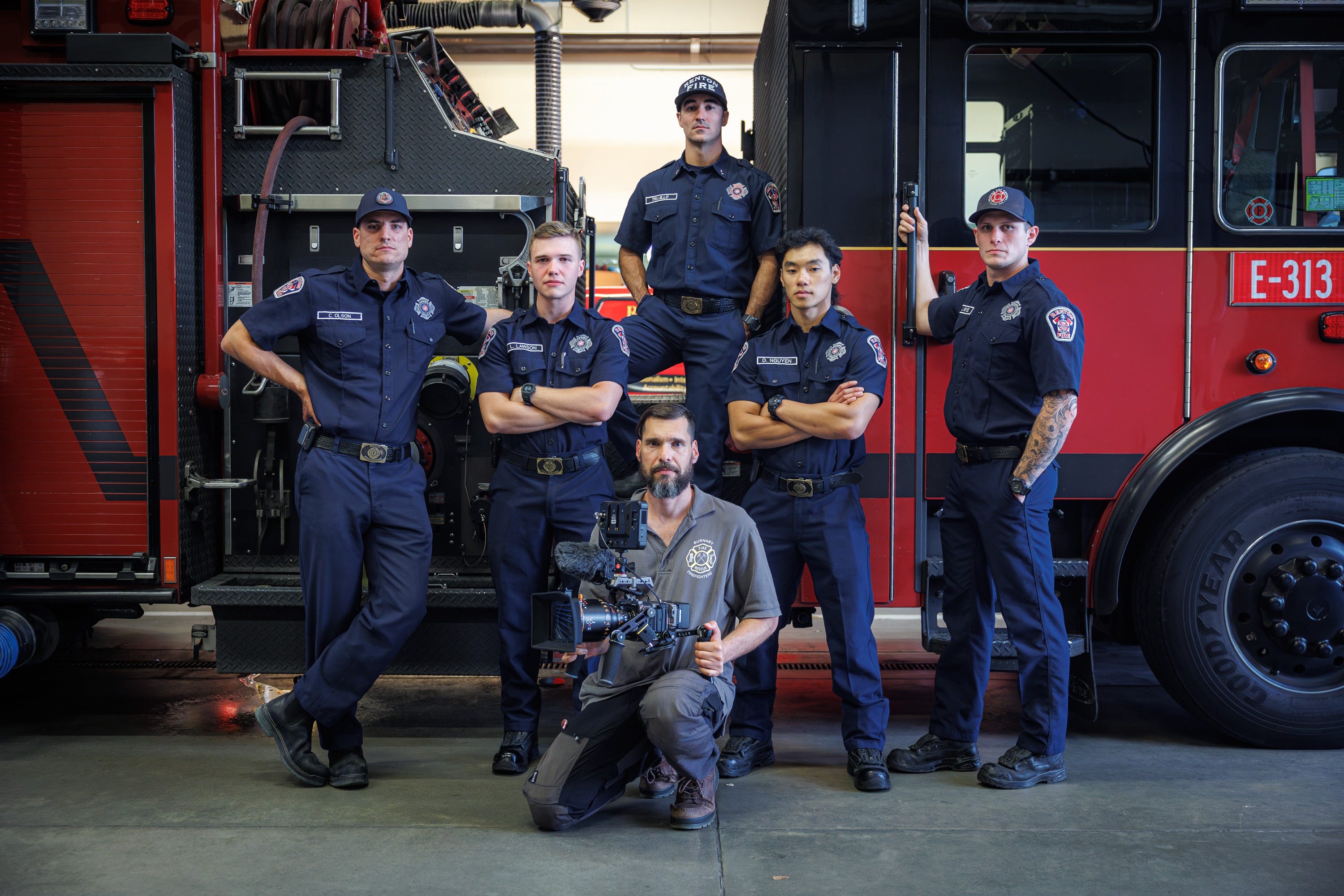
Thank God, both Amy and Micah agreed and clearly saw the benefit of the new direction. Three weeks later, after more tough money conversations with my business partner, we were filming at Firehouse 13 in Redmond, WA. I met the most amazing crew, ages 21 to 40. And the synchronicities followed—too many for me to share in one swoop. When all was said and done, we had cut out about 60% of the previous version and added roughly 50 minutes of new footage instead.
This was not the same film anymore. This was the film I had always dreamed of making.
I actually I just love ur title/ sub-title, it's so clever, I laughed out loud for the sheer perfection of it.🙌💥🙏💃🤗
Because dreams are exactly that, literal docos of our own unique mash of personal & collective symbols in a dream reel. Disgorged by our subconscious for our delectation. 😏
The trick is getting familiar enough with it to be able to decypher our own basic 'alphabet' , inviting us to learn fluency in this metaphoric-style language.
Hazzah for you !! 🙌🎊💥🎉 being wise enough to not only know enough to listen & pay attention to ur dreams, but to also understand the message coming thru, & commit to it. ✨🤓 OG coherence, friend. 🙌
🤓💃🙏✨celebrating u 💥🎉
I remember your passion and conviction so vividly. I knew it mattered. That fateful dream shaped SPOKE into exactly what it was meant to be: a documentary film with the potential to elevate the conversation and, perhaps, make a meaningful difference in people's lives. It has been a privilege to work alongside you on it.